

Somewhere in Nigeria right now, an old phone is sitting in a drawer. Its owner isn’t sure what to do with it. Too broken to sell, too valuable to throw away, so it just sits there, quietly becoming part of a much bigger problem. Multiply that phone by millions of laptops, televisions, and appliances across the country, and you start to see the shape of Nigeria’s electronic waste challenge.
As more homes and businesses adopt new technology, more old devices are discarded, and far too many of them end up in landfills or are burned in open fields, releasing toxic substances into the soil, water, and air that surrounding communities depend on.
BuyScrap Nigeria exists to change that story, one device at a time. The company’s belief is simple: an old laptop or a broken phone is not rubbish, it is a resource waiting for its next life. Through repair, refurbishment, resale, and responsible recycling, BuyScrap is helping Nigeria see electronic waste not as a problem to bury, but as an opportunity to build.
During the first half of 2026, that belief translated into real, measurable action. Here is what it looked like.
Planting Seeds in the Classroom
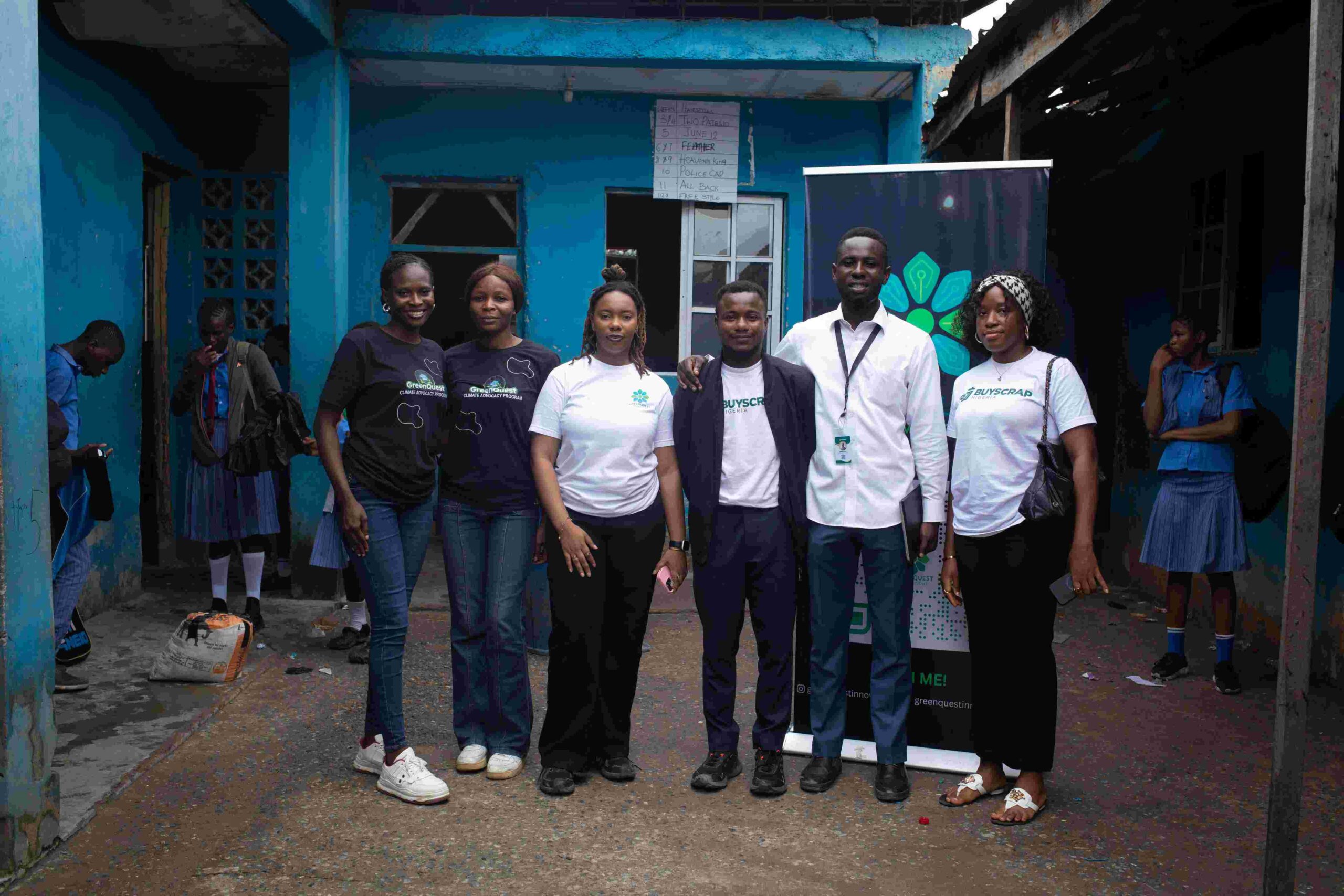
If Nigeria is going to solve its e-waste challenge for good, it will need a generation that grows up thinking differently about the devices they use. That’s why BuyScrap partnered with GreenQuest to bring an e-waste awareness workshop into secondary school classrooms in Lagos.
Seventy-two students walked away from that workshop with a new lens on something they had probably never thought twice about: their own phones and gadgets. They learned what happens to electronics after they stop working, why repair often makes more sense than replacement, and how the circular economy connects their everyday choices to the health of their environment. It’s a modest number next to Nigeria’s population, but awareness spreads. Each of those 72 students is now someone who can carry that message home, to friends, and eventually into their own careers.
Showing Up Where the Big Conversations Happen
No single company can fix a national waste problem alone, which is why BuyScrap has made a point of showing up in the rooms where Nigeria’s sustainability future is being shaped. The company took part in the 2026 World Environment Day celebration organised by GreeningUp Africa, standing alongside other businesses, entrepreneurs, and community leaders working on climate action and green enterprise.
It was an opportunity to represent BuyScrap within Nigeria’s growing sustainability ecosystem, trade ideas on circular economy models and community mobilisation, and build relationships with environmental stakeholders who share the same goal: a cleaner, more resilient Nigeria. These are the quiet conversations that eventually turn into partnerships, policy influence, and bigger collective impact down the line.
Sharpening the Tools for Growth
Behind the scenes, BuyScrap has also been investing in how it works, not just what it does. A company representative took part in ISO 56001 Innovation Management Systems training, an internationally recognised framework built to help organisations approach innovation in a structured, sustainable way.
It’s not the kind of update that makes headlines, but it matters more than it might seem. It signals a company thinking beyond its next milestone, building the internal systems and discipline needed to keep improving its services as it scales, and as Nigeria’s electronic waste challenge continues to grow alongside it.
Where the Impact Really Shows
This is the heart of BuyScrap’s work: taking devices that would otherwise be discarded and giving them a second chance, through collection, repair, refurbishment, resale, and, only as a last resort, recycling.
In just six months, that process kept more than 35 tonnes of electronic waste out of landfills and away from unsafe, informal disposal. At the same time, around 28 refurbished electronics were sold back into the market, giving Nigerians access to working, affordable technology instead of pushing them toward buying new.
It’s worth sitting with what those numbers actually mean. Thirty-five tonnes is toxic material that never leached into soil or drinking water. Thirty refurbished devices are thirty households or small businesses that got a laptop or a phone without straining their budget, and twenty-eight fewer new devices manufactured to meet that same need. This is the circular economy working exactly as it should: less waste, wider access, and more value squeezed out of resources we already have.
Investing in People, Not Just Devices
A circular economy is only as strong as the people powering it, and BuyScrap has spent this year investing in exactly that. Around 32 people were employed, trained, or otherwise supported through the company’s repair, refurbishment, recycling operations, and sustainability work.
Behind that figure are technicians deepening their craft, staff gaining real operational experience, and young Nigerians finding a way into a green economy that is only going to keep expanding. In a country where good jobs for young people can be hard to come by, this is work that builds both livelihoods and long-term, transferable skills, the kind that don’t disappear when trends change.
Growing Stronger Through Partnership
None of this work happens in a vacuum. Over the first half of 2026, BuyScrap has steadily widened its network, deepening ties with repair technicians, forming new supplier and refurbishment partnerships, and engaging stakeholders across government and private industry alike.
Outreach events and public campaigns have also opened doors to new business opportunities along the way. For BuyScrap, growth and sustainability aren’t competing goals, they move together. The company’s approach is built on collaboration rather than competition, on the belief that Nigeria’s e-waste challenge is big enough to need everyone rowing in the same direction.
A Circular Nigeria, Built One Device at a Time
Step back from the individual numbers and a clear story emerges. BuyScrap Nigeria is not simply a recycling company. It is helping build a circular economy, one where devices are repaired before they’re replaced, reused before they’re discarded, and responsibly recycled only when every other option has been exhausted.
From a Lagos classroom to a national climate stage, from an old phone in a drawer to a refurbished laptop in a new home, the first half of 2026 tells a story of steady, credible progress, not a finished job, but real momentum.
The road ahead is still long. Nigeria’s appetite for technology will keep growing, and so will the waste that comes with it. But BuyScrap has shown what’s possible when a company chooses to see opportunity where others see rubbish. Looking forward, the company remains committed to working alongside communities, businesses, governments, and development partners to build a cleaner environment, create more green jobs, and unlock the real economic value hiding in the electronics we too often throw away.
The next chapter of Nigeria’s e-waste story doesn’t have to be written in landfills and smoke. It can be written in repair shops, refurbished laptops, trained technicians, and students who already know better. BuyScrap is helping write that chapter, one device at a time.
For more information on electronic waste management, visit www.buyscrap.com.ng or contact Joshua on WhatsApp at +2348133087742 and via email joshua@buyscrap.com.ng

